
 Mark
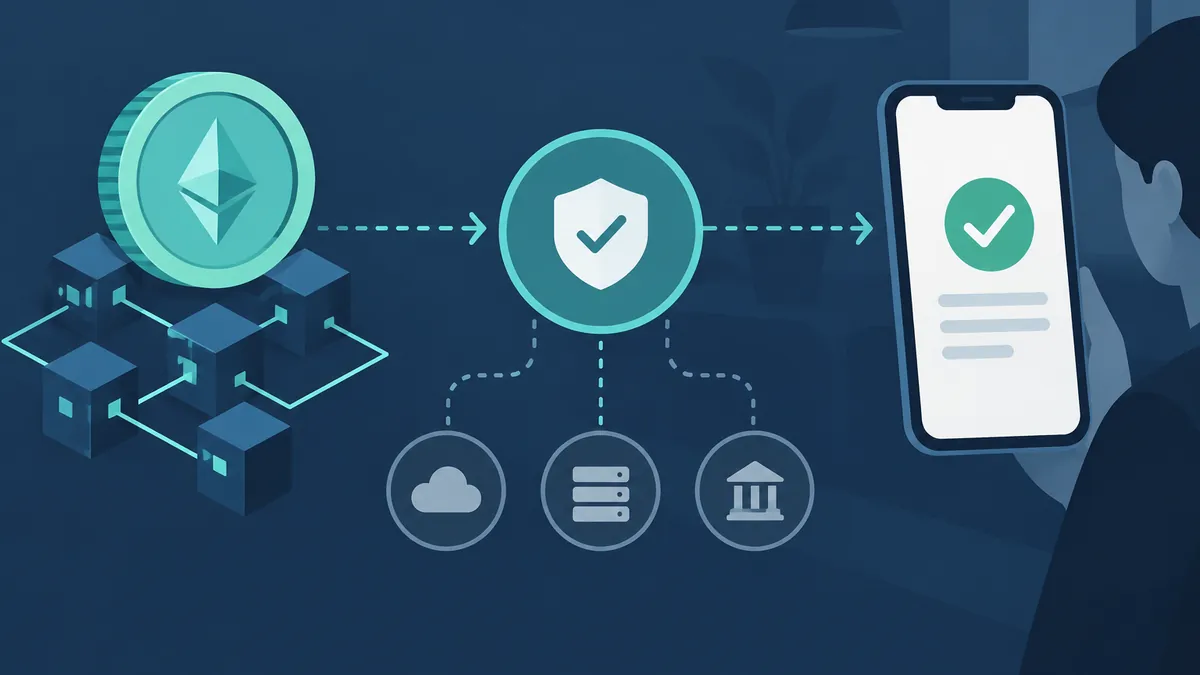
A token that promises mobile airtime has an understandable use case: exchange a digital asset for credit on a phone. But a clear use case is not proof of a reliable product. The important question is not whether the token can move between wallets. It is whether a holder can obtain the advertised mobile service, on stated terms, when needed.
Evaluating that promise means separating three things: ownership of the token, the right to request a top-up, and successful delivery by a mobile operator. Those events may depend on different systems and organizations. Start with the ordinary service, then examine what tokenization changes—and what it leaves unresolved.
Start with the service: what an ordinary mobile top-up delivers
A conventional international top-up begins with a destination country and a recipient’s mobile number. The customer selects an available amount and pays. The service then submits the recharge to the mobile operator. The intended outcome is credit applied to the correct phone account, not merely a successful payment or an order receipt.
For a concrete starting point, Numio lets users begin by choosing a country and entering a mobile number, including a supported number belonging to someone else. Before paying through any top-up service, verify the destination and number with the recipient. A correctly processed order can still be useless to the sender if it credits the wrong phone.
The sequence described in How Numio mobile top-ups work provides a conventional-service baseline: select the country, enter the number, choose an amount and pay; after payment confirmation, Numio submits the top-up to the operator and displays transaction status. It says supported operators are identified automatically and the final amount may be rounded down to an operator-supported denomination. This comparison is not evidence of cryptocurrency acceptance, token issuance or a blockchain integration.
A hypothetical airtime token must ultimately deliver a comparable result. A wallet transfer or token burn is only an intermediate event unless it leads to usable credit. Ask what the token adds: easier transferability, access to a particular service, or another demonstrable benefit. If redemption merely introduces another asset purchase and extra fees, the added complexity needs a clear justification.
What does the token holder actually have a right to redeem?
“Backed by airtime” can describe very different arrangements. One token might represent a fixed amount of local-currency credit. Another might buy a variable amount calculated at redemption. A third might provide only a discount on a separate purchase. These are not equivalent rights, even if their marketing uses similar language.
The terms should identify the organization responsible for honoring redemption, the eligible holder and the service owed. Look for the unit of entitlement: a monetary value, a particular data bundle, minutes, or another defined product. Check whether taxes, processing charges or conversion spreads reduce the amount delivered. A reference to “$10 of value” is incomplete without explaining how that value becomes a specific operator product.
Also establish whether the entitlement survives a transfer. A token may be freely transferable onchain while service access remains restricted by location, identity checks or account conditions. Read the rules on expiry, minimum redemption sizes, suspension and changes to the service catalog. Governance voting or an administrator’s permission to amend terms can materially change a holder’s expected utility.
A useful disclosure framework is MiCA Annex I: Disclosure items for crypto-asset white papers. This EU framework addresses purchaser rights and conditions, possible changes to rights, the quantity and quality of promised services, redemption procedures, and issuer and implementation risks. It is not US investor guidance, and citing it does not establish that a particular token falls within its scope or complies with it.
Use those categories to form precise questions rather than treating a white paper as a guarantee. Who owes the service? What can be claimed? Under what conditions can it be refused? If the documents cannot answer those questions consistently, an impressive token dashboard does not resolve the uncertainty.
Check whether redemption works for the intended country and operator
A headline country count is not the same as usable coverage for a particular recipient. Availability can depend on the country, operator, account type and recharge product. A project that advertises international reach should provide a way to check the exact destination before the holder commits funds or irreversibly surrenders tokens.
Distinguish airtime balance from data allowances and bundled services. General phone credit may not purchase the bundle a recipient expects, while a data product may have its own validity period or usage restrictions. The redemption interface should show what will arrive, in what denomination, and with which conditions. Do not assume that every product sold by an operator is available through an intermediary.
Pricing also needs an end-to-end calculation. Consider the token purchase cost, trading spread, withdrawal fee, blockchain transaction fee, redemption charge and any currency conversion. Compare the total with the actual credit received, not simply with a token’s displayed price. If the token trades freely, its purchase price may move independently of the service entitlement.
For example, suppose a hypothetical redemption requires 20 tokens for 100 units of local phone credit. The relevant cost is the full expense of acquiring and redeeming those 20 tokens. If redemption fees or supported denominations alter the delivered amount, that changes the comparison. A low token price alone says nothing about whether the resulting top-up is competitive.
Where practical, test the smallest useful redemption after reviewing the terms and permissions involved. Record the quoted product, all charges, order reference and recipient-confirmed result. One successful test is evidence that a route worked at that time—not proof that every destination works or that the provider can support larger demand.
What a smart contract cannot guarantee about mobile credit
A smart contract can enforce onchain rules, such as locking tokens, recording a request or burning a balance. It cannot independently observe a phone account’s credit balance. Some external mechanism must connect the blockchain request to the service provider and report what happened. That connection may involve an oracle, an application backend, a redemption intermediary or several of these components.
Ethereum’s documentation on Oracles explains why smart contracts need offchain components to access external information and services. It also highlights correctness, availability and source-dependency concerns. For airtime, multiple reporting nodes do not eliminate a shared point of failure if they all depend on the same operator API or aggregator.
Trace the full request path. Who receives the redemption instruction? Who pays or maintains the commercial balance needed to submit the recharge? Which system decides that delivery succeeded? A transaction hash proves an onchain event occurred; it does not, by itself, prove that the operator credited the intended phone.
Failure handling deserves equal scrutiny. If tokens are burned before operator acceptance, what happens after rejection or a timeout? Look for a documented process that distinguishes pending, failed and delivered requests. Retrying an uncertain request without checking its status can risk duplicate fulfillment; treating a timeout as success can leave a customer without credit or a remedy.
Security reviews must therefore cover more than contract code. An audit may assess specified smart-contract behavior without examining commercial agreements, API credentials, operating funds or customer support. A credible project should explain these limits and identify who can pause redemption, upgrade contracts or change the service data used to calculate entitlements.
A due-diligence checklist for airtime-linked tokens
Before buying for utility, gather enough evidence to describe the complete redemption process in plain language. You should be able to explain what you surrender, what the recipient gets, who performs each step and what happens if delivery fails. Unexplained gaps are risks, not details that decentralization automatically solves.
- Define the claim: identify the responsible entity, exact entitlement, eligibility rules and power to change the terms.
- Verify the destination: confirm the country, operator, phone-account compatibility and available recharge product.
- Calculate delivered value: include acquisition, network, conversion and redemption costs, plus any denomination adjustments.
- Inspect the dependencies: identify the contract controls, reporting sources, service intermediaries and operator connection.
- Check the remedy: establish how pending orders, rejected requests, refunds and already-burned tokens are handled.
- Protect the wallet: verify the application and contract, inspect transaction details and avoid unnecessary token allowances.
Keep service utility separate from the investment thesis. Genuine redemption demand does not automatically produce token-price appreciation. Users may acquire tokens only briefly, and fees, issuance or changes in redemption pricing may affect the economics. Likewise, trading volume and a rising price do not demonstrate successful service delivery.
The strongest evidence is a combination of clear obligations, supported destinations, transparent delivered pricing and verifiable fulfillment with workable failure handling. If those pieces are missing, the project may offer a transferable token without a dependable airtime service. Judge the redemption promise by the credit a recipient can actually use—not by how convincingly the blockchain records the request.