 Mark

For crypto users, the words token and wallet carry familiar associations: blockchain addresses, private keys, transfers, and perhaps a market price. Those associations can become misleading when an AI service uses the same vocabulary for its billing system.
A balance labelled “tokens” does not, by itself, establish ownership of a blockchain asset. Nor does it tell you how much analysis a purchase will buy. Before funding an account, separate three questions: what is being counted, what rights the balance provides, and who controls access to it.
Three meanings of token—and why a wallet label does not settle the question
Model-processing tokens are units used to represent content handled by an AI model. For text, a token can correspond to a word, part of a word, punctuation, or another text fragment. Counts depend on the model and encoding, so a fixed number of words is not a universal token quantity.
The model-provider guide Understanding and counting tokens explains tokenization and how input and output tokens relate to usage. That documentation helps explain processing measurement; it does not establish the contractual rights attached to a separate company’s prepaid balance.
Prepaid service credits are account units purchased for access to a service. A provider may call them tokens, credits, or a wallet balance. Whether they map directly to model-processing tokens, and what happens when they are consumed, must be established from that service’s billing documentation and terms.
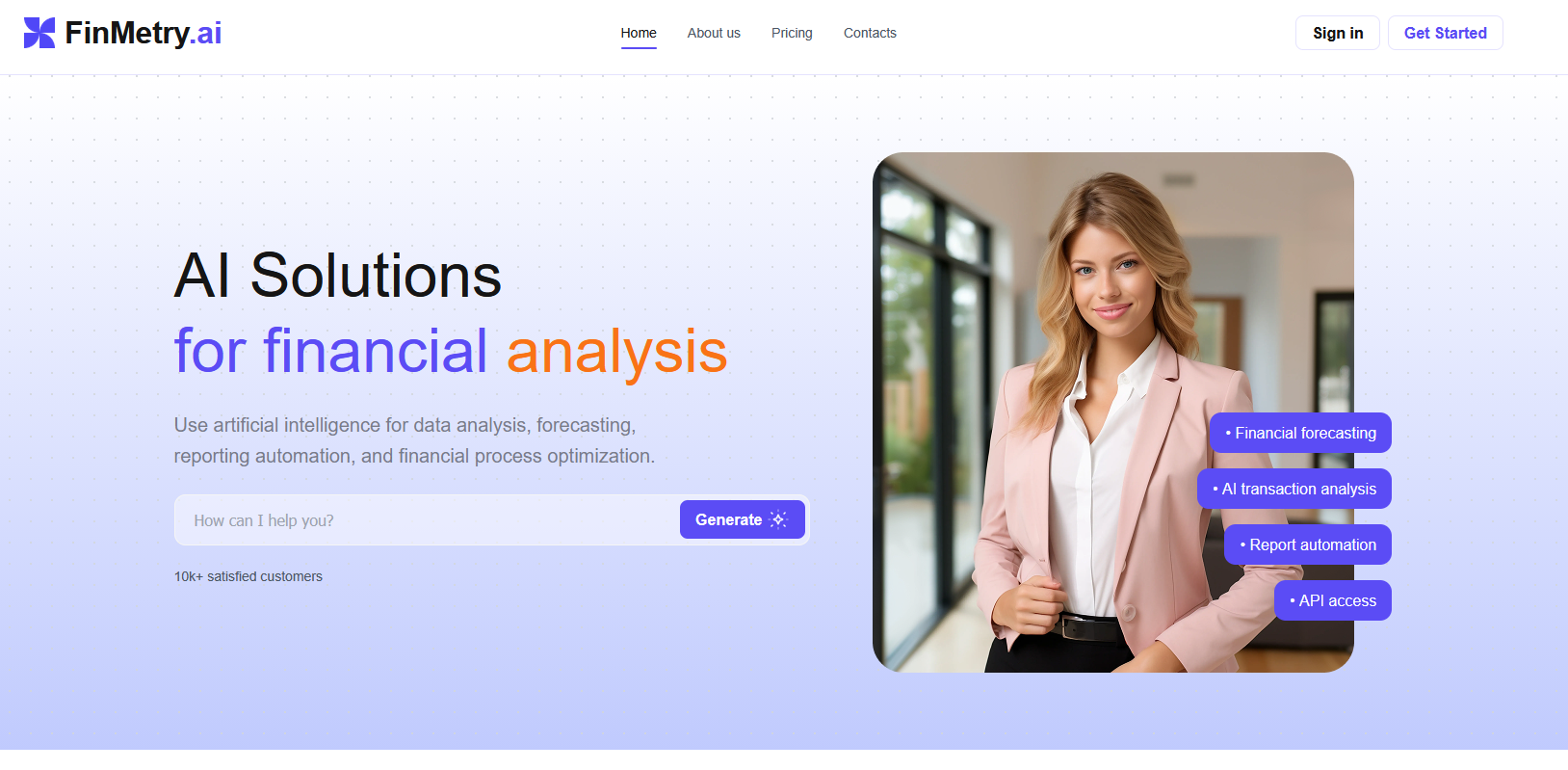
For a concrete example, https://www.numevia.io/ advertises transaction, expense, and income analysis, forecasting, and reporting alongside token purchases credited to a Token Wallet. These are advertised capabilities, not independently tested results. The terminology alone does not establish an on-chain asset or native crypto functionality. NUMEVIA’s Terms also describe the current build as a front-end demo and state that outputs are not financial advice.
Blockchain tokens, by contrast, are represented through blockchain state and governed by the relevant network and token implementation. Ethereum’s ERC-20 Token Standard defines functions for balances, transfers, total supply, and spending approvals. Compliance with that interface does not itself guarantee a market price, liquidity, or redemption rights.
These meanings can overlap within one product, but the connection must be documented. A blockchain token could provide access to a service, for example, without being the unit that a model processes. Similar names do not make the underlying systems equivalent.
Check the rights behind the balance, not just the terminology
The useful question is not simply “Is this a token?” It is “What can the holder actually do with it?” A prepaid balance may permit only the purchase of services inside one account. A blockchain token may support transfers, yet still carry no claim on company revenue or any promise of redemption.
Look for explicit answers about transferability, withdrawal, refunds, and permitted use. If a service does not document transfers between users, do not assume that a balance can be sold or gifted. If it quotes a euro purchase rate, do not interpret that as a promise to buy unused units back at the same rate.
For an asset presented as on-chain, identify the network and contract address through reliable official sources, then inspect the relevant implementation. A ticker symbol or dashboard number is not enough. Even a working transfer function does not answer whether an administrator can pause transfers, restrict addresses, or change parts of the system.
For service credits, the central evidence is different: billing rules, account terms, refund provisions, and usage records. A conventional account ledger is not inherently suspicious; many ordinary services use one. It simply creates a different relationship from holding assets through a private key.
Keep three ideas separate: technical control, contractual permission, and economic value. Being able to transfer a token does not guarantee that anyone will buy it. Having permission to use credits does not mean you can withdraw them. Paying for either does not automatically create an investment.
Read token pricing without inventing a cost per report
NUMEVIA’s published terms at https://www.numevia.io/pricing provide a useful billing example: €1 buys 10,000 tokens, purchases range from €10 to €5,000, and payments are one-time top-ups without auto-renewal. The displayed €100 example provides 1,000,000 tokens. These are purchase terms, not evidence of a tradable token price.
The arithmetic establishes how many account units a payment purchases. It does not establish how many units a completed report, forecast, or transaction review consumes. Without workload-consumption information, converting the advertised rate into a cost per report would be guesswork.
Several factors can matter in AI billing: input size, output length, model choice, repeated requests, and any service-specific charging rules. These are questions to investigate, not assumptions about this particular service. A service could apply its own accounting system rather than pass through a model provider’s token counts directly.
Ask for a worked example showing the balance before a task, the task’s scope, and the balance afterward. Ideally, usage records should identify chargeable activity and explain how unsuccessful or interrupted requests are handled. A large-looking token quantity is not informative without a meaningful consumption denominator.
Retention needs equally careful reading. NUMEVIA advertises that purchased tokens never expire, while its pricing FAQ refers readers to the Terms for account-inactivity rules. Do not treat non-expiry language as an unconditional guarantee of permanent account access. Token expiry and account inactivity are separate issues that need to be read together.
Likewise, no auto-renewal means the purchase does not automatically repeat; it does not establish refund eligibility, cash redemption, or a fixed future service offering. Each of those requires its own supporting terms. For an unfamiliar service, a small documented test is more informative than a large advance purchase based on the unit rate alone.
Separate custody, account access, and data security
In crypto, custody concerns control over assets, including who holds or can use the relevant keys. With a conventional service balance, the practical concerns are usually account authentication, provider records, and the rules governing access. A balance displayed under “Wallet” does not prove that a recoverable blockchain address exists behind it.
Before applying self-custody habits, establish whether there is anything to self-custody. Is there a documented network, an address, and a supported withdrawal process? Can a standard wallet independently verify the balance? If these features are not documented, treat the balance as a service account entry unless reliable evidence establishes otherwise.
The security tasks also differ. A blockchain allowance can authorize a smart contract to spend certain tokens; an AI-service login ordinarily grants access to an account. Buying ordinary service credits should not lead you to disclose a seed phrase. Any request to import a recovery phrase or sign an unexplained transaction deserves immediate scrutiny.
Data security is another separate layer. A service might protect account access while still being unsuitable for sensitive financial records. Before uploading exchange exports or transaction histories, assess retention, deletion, access controls, and whether the information can be used for other purposes. Remove unnecessary identifiers and never include private keys or API secrets in analysis inputs.
Provider statements about encryption are relevant, but they do not answer every operational question. For example, NUMEVIA advertises encryption and secure cloud storage; those statements alone do not establish specific retention controls or independently verified security performance. Ask for the detail your intended use requires rather than filling gaps with assumptions.
A practical checklist before buying any token balance
You do not need a technical audit to avoid the most common category errors. Start by collecting enough evidence to describe the purchase accurately in one sentence: “I am buying service access,” “I am acquiring a blockchain asset,” or “I am paying for measured model usage.” If you cannot yet do that, pause.
- Identify the unit: Is it a processing measure, a provider-defined credit, or an on-chain token? What documentation establishes that?
- Identify the rights: Check use restrictions, transferability, withdrawals, refunds, expiry, and account-inactivity provisions separately.
- Verify the consumption rules: Look for task-level charges or a usable estimation method, not just a purchase conversion rate.
- Confirm the access model: Determine whether access depends on a service account, private keys, or both, and understand recovery options.
- Test the service and its records: Use non-sensitive sample data where appropriate and compare the result and usage record with the advertised function.
For financial analysis, evaluate the output independently of the payment mechanism. A plausible-looking summary can still omit fees, misclassify transfers, or confuse realized gains with changes in market value. Reconcile material figures with source records and keep assumptions visible. Payment for analysis is not evidence that the analysis is correct.
The central distinction is simple: a unit’s name does not determine the rights attached to it. Model tokens describe processing, service credits describe access under provider terms, and blockchain tokens describe assets represented on a network. Read the documentation for the thing you are actually buying—not the thing familiar vocabulary makes it resemble.