

AI Tokens vs. Crypto Tokens: What Does a Token Wallet Actually Hold?
A token balance can measure AI processing, represent prepaid service access, or track a blockchain asset. Here is how to identify the difference before paying.

107
112
A token balance can measure AI processing, represent prepaid service access, or track a blockchain asset. Here is how to identify the difference before paying.

AI-generated answers can make a token or protocol easier to find, but visibility is not proof of security, legitimacy, decentralization, or investment value. Learn how to separate machine-readable project information from real crypto due diligence.

Low-stakes browser simulations can expose habits around constraints, prioritization, and review. They cannot test a crypto trading strategy, predict token prices, or replace portfolio risk controls.
Activity, quests, referrals, and rewards can grow a community without creating durable value for a token. Use this framework to separate product engagement from enforceable token-holder economics.
Crypto market analysis usually focuses on prices, liquidity, volatility, trading volume and on-chain activity. Yet investors and digital businesses increasingly depend on another layer that deserves the same scrutiny: the…
Crypto portfolio analysis becomes difficult long before the number of assets grows large. An investor may hold coins across several exchanges, keep long-term positions in private wallets, participate in staking,…
The rapid expansion of the decentralized web has brought Web3 technologies into mainstream commerce, but it has also exposed retail users to highly advanced security threats. While blockchain technology remains…
As digital assets transition from experimental pilots to production-ready enterprise systems in 2026, global organizations are actively redefining their treasury infrastructure. Managing international payouts across highly fragmented blockchains poses significant…
Project timelines must integrate precise upgrade schedules to maintain competitive staking mechanisms. For instance, Ethereum’s transition through multiple phases–Beacon Chain activation in late 2020, followed by The Merge in 2022–illustrates…
Understanding the connection between Bitcoin and other digital assets is key to navigating the current market. Over the past year, Bitcoin’s price has exhibited a 0.85 Pearson coefficient with Ethereum,…
Utilize weighted liquidity containers to maintain target allocations dynamically without manual intervention. These structures adjust token proportions continuously, preserving predefined ratios while facilitating efficient asset management. For instance, a pool…
Quantifying how fluctuations in input variables influence a predictive framework is key to understanding potential risks within any system. For example, altering an economic growth rate by just 0.5% can…
If you have misplaced your seed phrase or failed to maintain a secure backup, immediate restoration becomes critical. The seed phrase–typically a set of 12 to 24 words–is the master…
Attempting to forecast precise moments to buy or sell digital currencies often leads to missed opportunities and unnecessary risks. Volatility in these markets routinely exceeds 5% intraday, with examples like…
Decisions on network improvements rely heavily on active participation within the decision-making body. Democracy in this context means that participants with validation rights evaluate and approve change proposals based on…
For organizations seeking scalable artificial intelligence solutions, SingularityNET offers a unique platform where diverse AI algorithms interact transparently without central control. By leveraging blockchain technology and the AGIX token, this…
Protection of blockchain holdings requires tailored coverage that addresses unique vulnerabilities. Unlike traditional valuables, these holdings face risks such as private key theft, smart contract failures, and exchange insolvencies. Recent…
ASIC devices deliver hash rates exceeding 100 TH/s with power consumption around 3000 W, achieving efficiency near 33 J/TH, which outpaces most graphics cards by a significant margin. In contrast,…
Accessing equity markets without direct ownership has become feasible through decentralized frameworks that replicate shares using blockchain technology. This system issues tokenized representations mimicking the price movements of underlying equities,…
If you’re a beginner aiming to build a solid foundation in cryptocurrency extraction, start with a detailed tutorial that covers both physical components and digital tools. Understanding the core parts…
Identifying trends swiftly is key. In recent months, Bitcoin’s 30-day moving average crossing above the 50-day signaled strong bullish momentum, confirmed by volume indicators. Recognizing such intersections allows traders to…
Effective token distribution directly influences market value and user engagement. For example, projects with an initial supply of 1 billion tokens but a circulating supply capped at 300 million tend…
Implementing a robust hedging approach using options can safeguard your digital assets against extreme volatility without sacrificing upside potential. For instance, buying put options on major tokens like Bitcoin or…
The expanding platform offers far more than simple token transactions. Its robust technology underpins a vast ecosystem where decentralized applications operate through programmable smart contracts. These contracts automate agreements without…
Choosing the right validator for delegation can generate consistent income with an annual percentage yield close to 15%. This approach leverages network consensus mechanisms, allowing participants to lock tokens and…
The most cost-effective approach to power-intensive operations lies in targeting regions where energy tariffs fall below $0.03 per kWh. For instance, parts of Paraguay leverage abundant hydropower, offering rates as…
Securing valuable devices requires a multi-layered approach that limits unauthorized entry and controls physical custody. Effective measures start with restricting access to sensitive areas through lockable doors, biometric systems, or…
Implementing a live validation phase after initial paper simulations is critical to confirm that your trading approach performs under current market dynamics. Historical data backtests often overfit and fail to…
Start with a clear risk assessment. Recognize that most compromises stem from overlooked exposure points within wallet architecture. An effective strategy involves dissecting every component–key storage, transaction signing, network communication–to…
Isolating sensitive keys from any network connection remains the most reliable method to prevent unauthorized access and cyber theft. Devices physically disconnected from the internet, often called cold wallets, ensure…
Connecting independent ledgers through seamless interoperability is no longer a theoretical goal but an operational reality with the advent of the Inter-Blockchain Communication protocol (IBC). This protocol enables diverse chains…
Strong security in cryptography relies fundamentally on complex numerical structures. Prime factorization, elliptic curves, and modular arithmetic form the backbone of widely used algorithms like RSA and ECDSA. These systems…
Focus on user retention rates and average transaction volume to gauge the sustainability of in-game asset currencies. Recent data shows that platforms with daily active users exceeding 100,000 tend to…
Focus on aligning signals across various periods to improve trade accuracy. Combining short-term and long-term charts helps filter out noise and identify genuine trends. For instance, a bullish crossover on…
Memories of past industrial achievements often center around a period marked by unparalleled productivity and economic influence. This particular phase, spanning roughly from the late 19th to mid-20th century, witnessed…
Establishing a clear timeline for safeguarding your digital asset holder is critical. Recent data from cybersecurity reports reveals that breaches targeting personal crypto holders increased by 37% in the past…
Focus on confirming support and resistance zones by selecting points with multiple price touches rather than arbitrary connections. Validation requires at least three significant interactions with the slope to reduce…
Accurate prediction relies heavily on analyzing collective psychology reflected in online chatter. Tracking sentiment shifts across platforms like Twitter and Reddit reveals short-term momentum changes before price moves materialize. For…
The computational power dedicated to mining directly correlates with the robustness of the blockchain against attacks. Current metrics show that over 350 exahashes per second (EH/s) secure the protocol, reflecting…
Private data security remains a critical factor when selecting an online archive solution. Utilizing a distributed ledger protocol with native token incentives, this platform offers users the ability to rent…
A well-crafted strategy for trading futures and options can multiply returns significantly, but it also magnifies exposure to adverse price movements. Leveraged contracts enable participants to control larger positions with…
The cryptocurrency ecosystem has matured significantly since Bitcoin’s inception in 2009. What started as a peer-to-peer electronic cash system has evolved into a sophisticated financial infrastructure encompassing decentralized finance, smart…
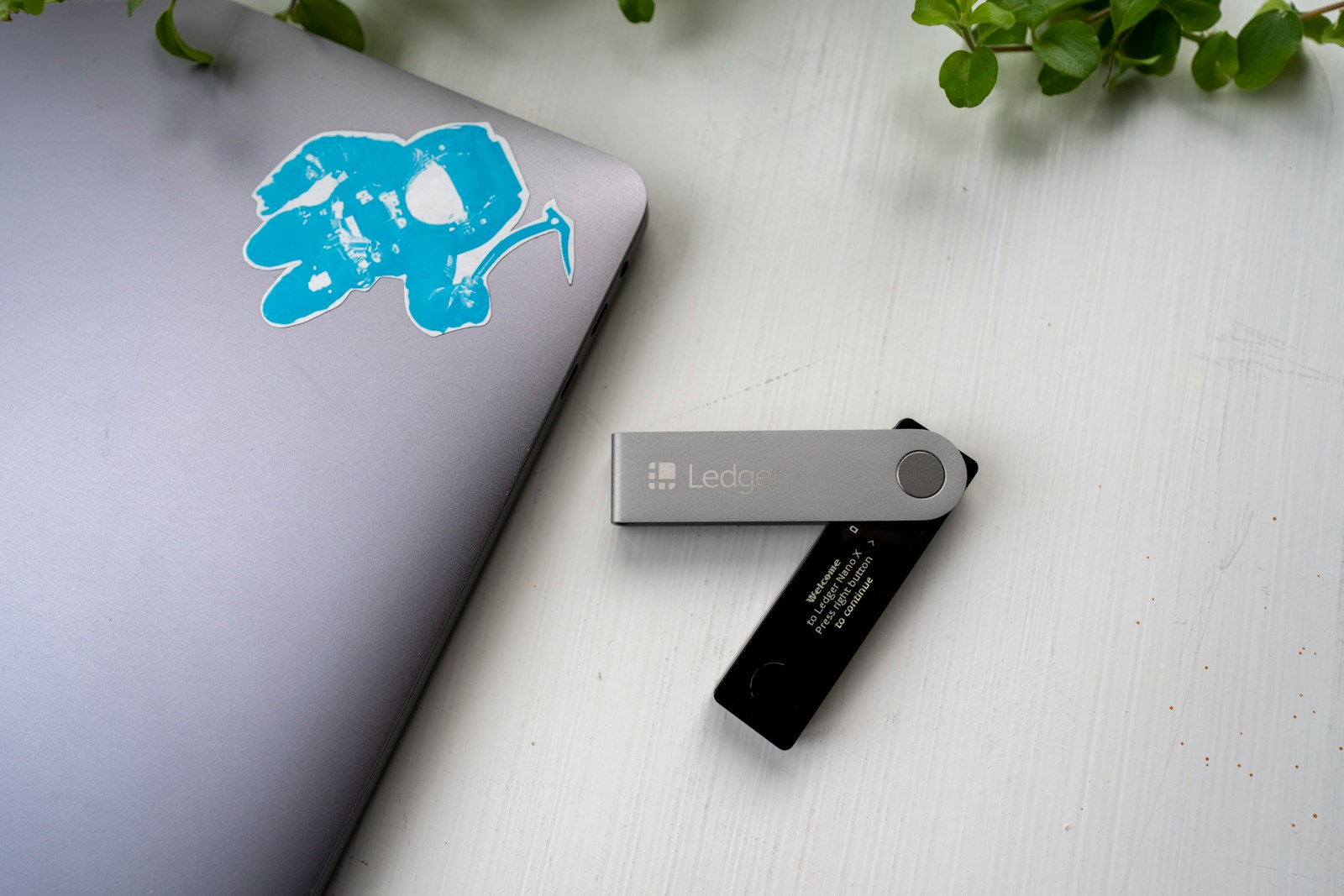
If security is your priority, Ledger’s Nano X offers advanced chip-level protection combined with Bluetooth connectivity for $149. In contrast, Trezor Model T, priced at around $219, provides an open-source…
Failing to enforce strict access restrictions is a primary cause of catastrophic security breaches. Credentials must reside within isolated environments, ideally hardware security modules or secure enclaves, to prevent unauthorized…
The Hedera network employs a unique algorithm that structures transactions as a directed acyclic system, enabling rapid finality without compromising security. Unlike traditional blockchain methods, this approach processes thousands of…
Implementing rigorous evaluation processes directly improves the reliability of blockchain studies. Establishing clear standards for assessing experimental design and data interpretation enhances transparency and reduces bias. For instance, recent audits…
Democracy in blockchain governance manifests uniquely through DPoS systems, where token holders transfer their influence to representatives who maintain network integrity. This model shifts direct participation into a layer of…
Participation lies at the core of distributed network administration. Networks relying on decentralized protocols empower their community to influence critical directions through structured voting mechanisms. For example, recent upgrades in…
Immediate action is required if a node experiences downtime exceeding 5 minutes within a single epoch. Such inactivity directly impacts consensus participation and often results in stake reductions to discourage…
Identifying profit potential requires close monitoring of discrepancies in asset quotations on multiple trading platforms. For example, Bitcoin recently exhibited a spread exceeding 0.8% between Binance and Coinbase Pro, presenting…
Utilize a trustless network to facilitate the seamless transfer and monetization of datasets without relying on central authorities. This platform enables providers to retain control over their assets while granting…
Revival of classic mining rigs is gaining momentum thanks to coins like Ravencoin (RVN) that remain optimized for such hardware. With major networks shifting away from traditional consensus mechanisms, enthusiasts…
For developers seeking seamless interoperability across multiple blockchain ecosystems, the Moonbeam platform offers a robust solution by enabling Solidity-based decentralized applications to run natively on the Polkadot relay chain. Utilizing…
To launch a profitable rig in your cellar, prioritize efficient hardware with high hash rates and manageable power consumption. For instance, the Antminer S19 Pro delivers around 110 TH/s at…
Evaluating the persistence of price movements requires a careful examination of rate changes over time. Acceleration in asset prices often signals robust directional force, while deceleration may indicate an impending…
Governments worldwide adjust their approaches to digital asset policies primarily due to fluctuating market conditions and emerging technological risks. For example, the U.S. Securities and Exchange Commission (SEC) has issued…
Pooling resources is the most practical approach for investors with limited assets aiming to meet stringent participation criteria in blockchain consensus mechanisms. By joining collective entities, individuals bypass high minimum…
Installing robust physical barriers remains the most straightforward method to reduce unauthorized access to extraction sites. Perimeter fencing combined with reinforced gates can delay intruders significantly, allowing guards sufficient time…
Identifying the founder of Bitcoin remains a challenge that continues to captivate both enthusiasts and experts. The anonymous creator, known only by a pseudonym, launched the first decentralized cryptocurrency in…
Trading platforms rely heavily on two key roles: liquidity providers who place orders into the book and those who execute against these existing offers. Liquidity suppliers add depth to the…
Mining operations for decentralized ledgers demand immense computational power, resulting in significant energy consumption. For example, Bitcoin mining alone consumes over 120 terawatt-hours annually, comparable to the electricity usage of…
Accessing digital collectibles on the Terra blockchain requires a platform that integrates both secure trading and streamlined project initiation. The Luart ecosystem offers a decentralized hub where users can buy,…
Consensus mechanisms serve as the backbone for distributed authorization, enabling multiple parties to authorize transactions without relying on a single point of failure. In enterprise environments, deploying such joint custody…
Opting for self-custody grants full ownership over cryptographic credentials, removing dependency on intermediaries. With non-custodial solutions, individuals maintain exclusive access to their private keys, ensuring absolute control and reducing risks…
Mixing services play a critical role in enhancing confidentiality within decentralized finance (DeFi) ecosystems. By pooling together cryptocurrency inputs and redistributing them, these mechanisms sever the direct link between sender…
Effective risk management demands rigorous simulation of adverse market events. By applying hypothetical shocks–such as sudden interest rate spikes, liquidity freezes, or geopolitical upheavals–investors can evaluate how their holdings might…
nluna offers a flexible way to maintain liquidity while earning rewards on staked assets within the Terra ecosystem. By converting locked bLUNA into tradable tokens, users can optimize capital efficiency…
Verification of destination keys is the first and most effective defense against scams that exploit visually similar strings. Attackers rely on subtle character substitutions or homoglyphs to create addresses nearly…
Cryptocurrencies often serve as a safe haven during periods of international conflict and economic sanctions. For instance, the escalation of war in Eastern Europe triggered a 15% surge in Bitcoin’s…
Regions with advanced digital infrastructure report up to 45% higher usage rates of decentralized financial services compared to areas with limited connectivity. For instance, Southeast Asia’s urban centers benefit from…
Monte Carlo simulations provide a robust framework for quantifying risks and projecting a range of possible results in complex systems. By generating thousands–or even millions–of random samples based on input…
Discipline remains the cornerstone of effective trading strategies. According to recent statistics, over 80% of active speculators exit positions prematurely or deviate from their predefined risk management plans, resulting in…
Investment decisions often hinge on the ranking of digital assets by their total supply multiplied by current price, revealing their overall valuation. For example, Bitcoin’s dominance is reflected not just…
Establishing a well-defined legal framework accelerates innovation by providing developers and enterprises with clear boundaries for product development and deployment. For instance, jurisdictions that have introduced precise legislation around digital…
Trust lies at the core of asset management, but who actually holds the keys determines the extent of real control. When funds are held by a third-party, responsibility shifts away…
Accessing affordable and scalable processing resources is no longer limited to centralized providers. The Golem ecosystem offers a peer-to-peer platform where users can rent out idle CPU and GPU capabilities,…
Expanding access to node operation has become the key driver of equitable blockchain ecosystems. Recent data from Ethereum 2.0 shows that over 65% of active nodes are now operated by…
Utilizing instant liquidity mechanisms allows users to access vast amounts of capital without providing traditional security. This approach leverages smart contracts that execute borrowing and repayment within a single blockchain…
dYdX offers a robust framework for leveraged positions using perpetual contracts, enabling traders to amplify exposure up to 25x without traditional intermediaries. This platform leverages smart contract architecture, ensuring trustless…
Concentration of computational power within a handful of dominant pools directly challenges Nakamoto’s vision of a trustless and distributed network. Currently, the top five mining entities control over 60% of…
Active participation rate directly influences the robustness of blockchain ecosystems relying on delegated consensus mechanisms. Data from Ethereum 2.0 shows that validator engagement consistently exceeds 90%, correlating with a lower…
Prevention begins with continuous data analysis that identifies anomalies in transaction patterns and access attempts. Recent reports show that unauthorized access incidents to digital wallets have surged by 35% in…
Protection mechanisms must prioritize risk mitigation through robust management of digital assets stored on centralized services. In 2023 alone, cyberattacks targeting trading venues resulted in losses exceeding $2 billion, underscoring…
Current estimates show that certain distributed ledgers consume upwards of 100 terawatt-hours annually, surpassing the energy use of some small nations. This magnitude demands precise quantification of their carbon emissions…
Continuous assessment of cryptographic systems is mandatory to identify latent vulnerabilities before they escalate into breaches. Industry reports reveal that 40% of blockchain-related incidents in the past year stemmed from…
Recognizing recurring trends in cryptocurrency extraction reveals clear phases of rapid growth followed by sharp declines. For instance, during the 2017 surge, hardware demand skyrocketed, pushing GPU prices up by…
Large stakeholders influence price trends significantly, often triggering rapid shifts in asset values. For example, in Q1 2024, a single institutional holder’s liquidation of $500 million worth of crypto assets…
For applications demanding confidentiality, leveraging SCRT tokens on a platform built around encrypted computing offers clear advantages. Unlike traditional decentralized ledgers, this approach integrates Trusted Execution Environments (TEE) to enable…
Introducing government-backed digital tender directly affects decentralized tokens by altering liquidity dynamics and user trust. Recent data from countries like China, where sovereign digital units have seen daily transaction volumes…
Recognize that a consolidation channel following a steep price decline often signals further losses ahead. These rectangular or slightly upward-sloping formations represent pauses in selling pressure, where prices stabilize before…
Implementing zero-knowledge technology enables verification of information while maintaining complete anonymity. This method allows one party to prove possession of certain data without disclosing the data itself, drastically enhancing protection…
Achieving balanced distribution across clients and geographic zones is key to sustaining system integrity. Data from recent blockchain ecosystems shows that networks with over 40% of nodes concentrated in a…
1inch operates as a leading aggregator that streamlines token swaps by scanning multiple decentralized exchanges (DEXs) to secure the most efficient routes. By splitting orders across several liquidity sources, it…
Implementing energy-efficient technologies directly cuts greenhouse gas emissions. For instance, shifting from diesel-powered machinery to electric alternatives can reduce fuel consumption by up to 40%, significantly lowering CO₂ output. Case…
Starterra offers a streamlined initial offering environment specifically designed to accelerate projects within the Terra ecosystem. By integrating directly with Terra’s decentralized exchange (DEX), it ensures seamless token swaps and…
Recent data indicates that the daily transaction volume involving decentralized tokens for purchasing goods and services has surpassed $2 billion globally. This surge reflects a growing acceptance among retailers, with…
Interest rate hikes in major economies have intensified the interaction between decentralized assets and traditional investment vehicles. For instance, since the Federal Reserve increased rates by 425 basis points from…
Adopting a security framework that eliminates implicit confidence in any component is paramount for safeguarding digital wallets. Instead of assuming inherent reliability, every access request and transaction must undergo rigorous…
Ignore the notion that a company’s valuation alone dictates its investment potential. Market capitalization, calculated as share price multiplied by total supply of shares, often misleads investors into equating bigger…
For optimized cryptocurrency extraction, reconfigurable silicon devices deliver unmatched balance between adaptability and performance. Unlike fixed-function ASICs, these chips allow customization of internal logic blocks to suit specific algorithms, leading…