 Mark
Mark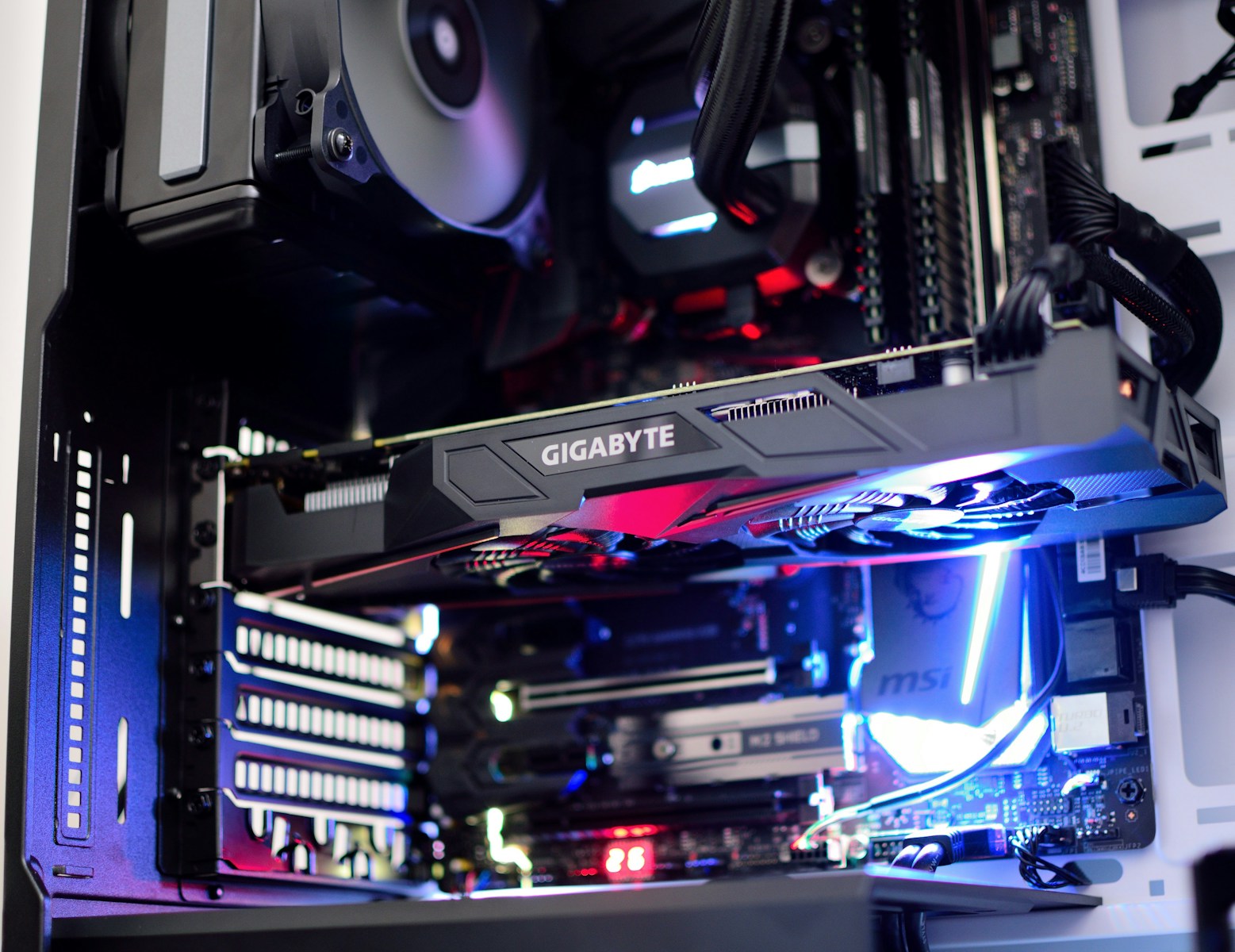
ASIC devices deliver hash rates exceeding 100 TH/s with power consumption around 3000 W, achieving efficiency near 33 J/TH, which outpaces most graphics cards by a significant margin. In contrast, modern GPUs like the NVIDIA RTX 4090 produce roughly 120 MH/s at approximately 450 W, translating to about 3.75 J/MH. This gap in raw output and energy utilization makes ASICs the preferred choice for large-scale operations focused on maximizing throughput per watt.
However, versatility plays a critical role in decision-making. While specialized chips excel in specific algorithms such as SHA-256 or Scrypt, high-end graphical processors maintain adaptability across multiple hashing functions and cryptographic tasks. Their performance rate varies widely depending on software optimizations and mining protocols, often ranging from 80 to 150 MH/s for Ethereum-like computations before the shift away from Proof of Work.
Evaluating total cost of ownership requires factoring initial investment alongside operational expenses. ASIC units demand higher upfront capital but compensate through superior long-term returns due to optimized energy efficiency and sustained hash output. Meanwhile, GPUs benefit from lower entry costs and residual value post-use in gaming or rendering applications, offering flexibility absent in fixed-function silicon.
Recent market fluctuations highlight supply chain impacts on availability and pricing. Scarcity of semiconductors has inflated GPU prices by up to 40% over the past year, narrowing the economic advantage traditionally held by these accelerators. Conversely, new-generation ASICs incorporate improved cooling solutions that reduce thermal throttling and prolong device lifespan, further solidifying their dominance in pure computational power delivery.
Ultimately, selecting between programmable compute units and dedicated hash engines hinges on your operational goals–whether prioritizing peak throughput per watt or maintaining multi-purpose utility under constrained budgets. How much does algorithm-specific optimization matter compared to flexible deployment? The answer will direct your strategy amid evolving network difficulties and regulatory environments.
Mining hardware comparison: GPU vs ASIC performance [Mining & Staking mining]
For cryptocurrency extraction tasks, specialized devices designed for specific algorithms offer the highest throughput and energy savings. Application-Specific Integrated Circuits reach hash rates often exceeding 100 TH/s on SHA-256 chains while consuming under 3,500 watts, pushing efficiency beyond 30 J/TH. In contrast, programmable processors tailored for parallel workloads deliver flexibility but generally operate at lower raw speeds–commonly in the range of 30-60 MH/s with power draw around 150-250 watts per unit.
Evaluating throughput alongside power consumption reveals crucial distinctions. Field-programmable setups excel when algorithmic adjustments or multi-coin support is required due to their adaptability. However, for networks dominated by a single hashing method, custom silicon provides superior speed-to-watt ratios. For instance, Bitmain’s Antminer S19 Pro achieves approximately 110 TH/s at roughly 3250 W, whereas NVIDIA’s RTX 3080 averages around 60 MH/s with about 220 W consumed–translating into markedly different operational costs over time.
Efficiency and Operational Cost Implications
Energy efficiency remains paramount in assessing device viability. ASIC units consistently demonstrate better joule-per-hash metrics; this translates into lower electricity expenses per coin mined and longer profitability horizons even amid fluctuating token prices. A comparative study from Q1 2024 shows ASIC rigs maintaining ~29 J/TH on Bitcoin mining compared to GPUs ranging above 25 J/MH across Ethereum-class operations–a significant disparity given differing chain complexities.
Yet programmability offers strategic value during shifts in network difficulty or protocol updates favoring diverse cryptographic puzzles. GPU arrays can pivot between coins like Ethereum Classic, Ergo, or Ravencoin without hardware overhaul. This versatility supports decentralized participation models and staking mechanisms where computational diversity underpins network security rather than brute-force rate maximization.
The integration of staking protocols introduces another dimension: hardware optimized for consensus validation rather than pure calculation speed alters resource allocation priorities. While ASICs focus on raw arithmetic power for proof-of-work tasks, general-purpose graphics accelerators accommodate staking nodes efficiently by balancing compute with memory bandwidth requirements critical for consensus algorithms such as Proof-of-Stake variants found on Polkadot or Cardano networks.
Diving deeper into deployment scenarios illustrates that large-scale industrial operations gravitate toward dedicated circuits due to scale economies and predictable returns tied closely to wattage management. Conversely, smaller operators or hobbyists benefit from reconfigurable solutions which reduce upfront capital risk and enable swift adaptation to emerging protocols or forks affecting token economics.
The choice ultimately hinges on intended application: maximizing extraction speed under fixed conditions favors purpose-built chips, whereas embracing algorithmic fluidity and consensus participation benefits from versatile computation units. Monitoring market trends suggests that as hybrid chain models evolve–with some favoring combined proof-of-work/stake mechanisms–the demarcation between these technical approaches will blur but remain defined by fundamental trade-offs in throughput versus adaptability.
Hashrate differences between GPU and ASIC
The efficiency of cryptographic calculations varies significantly depending on the type of device used. Specialized units designed specifically for one algorithm often deliver hashrates magnitudes higher than general-purpose processors. For instance, while programmable graphics accelerators can achieve hashrates in the range of tens to hundreds of megahashes per second on certain algorithms, dedicated machines optimized for a single task reach terahash scales effortlessly.
In practical terms, this means that specialized circuits outperform multipurpose chips by orders of magnitude when measured in hashes per second per watt consumed. This efficiency gap directly affects profitability and operational costs, especially under rising electricity prices. Yet, flexibility remains a consideration: programmable devices can switch between algorithms, adapting to market shifts, while fixed-function units excel only within narrow parameters.
Technical distinctions impacting output rate
The architectural design underlying application-specific integrated circuits enables parallel processing at an unprecedented scale. Each chip embeds millions of logic gates configured precisely for one hashing function, allowing continuous high-frequency operation without overhead from extraneous computations. Conversely, programmable processors handle numerous instructions per cycle but must allocate resources to diverse tasks beyond raw hash calculations.
A concrete example is the SHA-256 algorithm used in Bitcoin-like protocols: modern specialized rigs regularly surpass 100 terahashes per second (TH/s) with power consumption around 3,000 watts. Meanwhile, programmable accelerators typically yield less than 100 gigahashes per second (GH/s) with similar or greater energy demands. Such disparity highlights why large-scale operators gravitate toward dedicated solutions despite initial investment hurdles.
Recent case studies from Ethereum Classic networks illustrate how flexible compute units sustain moderate hashrate outputs across multiple algorithms but lack the peak throughput observed in custom silicon setups tuned for a single protocol. As block rewards diminish over time due to halving events or protocol changes, maximizing hashes per joule becomes increasingly critical–favoring purpose-built devices for sustained network contribution.
An additional factor influencing total output relates to scalability and deployment density. Purpose-built equipment often comes in modular formats facilitating stacking and cooling optimization; combined with their superior energy conversion into computational work, this leads to substantially higher aggregate rates per rack unit compared to flexible alternatives.
The choice between adaptable processors and fixed-function machinery ultimately depends on strategic objectives: whether prioritizing versatility across multiple cryptographic functions or extracting maximum throughput within a singular ecosystem’s constraints. In volatile environments where protocol shifts occur unpredictably, multipurpose units retain value despite lower absolute hashrates; conversely, stable conditions reward investment into highly efficient specialized platforms delivering unparalleled hash generation speed.
Power consumption in real mining setups
When evaluating energy usage in operational cryptocurrency rigs, specialized chips demonstrate a clear advantage in electrical efficiency over graphical processors. For instance, modern iterations of application-specific integrated circuits (ASICs) achieve hash rates exceeding 100 TH/s while consuming around 3000 watts, resulting in an energy efficiency near 30 J/TH. In contrast, high-end video cards often deliver between 50 to 100 MH/s at power draws upwards of 250 watts, equating to approximately 2500 J/TH. This disparity highlights how custom silicon is engineered to maximize output per watt in practical environments.
Data from large-scale facilities reveal that the rate of computational work per unit of electricity is critical for profitability and sustainability. A notable case is Bitmain’s Antminer S19 Pro operating under stable conditions with a steady power input of roughly 3250 W and yielding about 110 TH/s. Compared to multi-GPU rigs running models like Nvidia RTX 3080 or AMD RX 6800 XT, which require multiple cards totaling over 1500 W for around 300 MH/s combined, the difference becomes even more pronounced. The cumulative effect on electricity bills and cooling demands cannot be understated when scaling operations.
Energy efficiency metrics and their implications
Efficiency expressed as joules per terahash (J/TH) serves as a fundamental metric for assessing each solution’s viability. ASIC devices maintain figures between 25-35 J/TH depending on model and firmware optimizations, reflecting their specialization toward single-algorithm tasks such as SHA-256 calculations. In comparison, general-purpose accelerators tend to exhibit values ranging from several hundred to over a thousand J/TH due to architectural trade-offs inherent in parallelized graphics processing cores designed for versatility rather than singular throughput.
A recent analysis conducted by F2Pool measured average real-world consumption across mixed deployments: racks filled with dedicated processors averaged around 32 J/TH during continuous operation, while equivalent outputs via arrays of consumer-grade accelerators hovered near 800 J/TH. Such differences influence strategic decisions regarding capital expenditure versus ongoing operational costs, especially amid fluctuating electricity tariffs worldwide. As energy prices rise in regions like Europe and parts of Asia, the emphasis on minimizing wattage per hash intensifies further.
Cost analysis for initial hardware investment
When evaluating the upfront expenditure for acquiring mining equipment, it is imperative to consider not only the purchase price but also the expected hash rate and energy consumption. Devices designed for decentralized ledger validation vary significantly in cost: specialized integrated circuits often demand an initial outlay exceeding $3,000 per unit, delivering hash rates in the tens of terahashes per second range. In contrast, programmable accelerators built on graphics processors typically cost between $500 and $1,200 each, with hash rates measured in hundreds of megahashes to a few gigahashes per second.
The efficiency ratio–hash output relative to power draw–is central to determining value over time. For example, a custom-built chip consuming approximately 3,000 watts might offer around 100 TH/s, translating into roughly 33 GH/s per watt. Meanwhile, a high-end graphics card operating at 250 watts can produce about 60 MH/s (0.06 GH/s), resulting in around 0.24 GH/s per watt. This stark disparity affects how quickly the initial capital can be recouped through block rewards or transaction fees.
Analyzing acquisition costs alongside operational capabilities
A detailed financial assessment should incorporate current market pricing trends and availability constraints. Recent supply chain disruptions have inflated prices for programmable units by up to 30%, whereas dedicated devices remain relatively stable due to established manufacturing pipelines but face risks from obsolescence caused by algorithm updates or network difficulty surges. Consider a scenario where an investor procures ten specialized machines at $3,200 apiece totaling $32,000 versus assembling a rig with six graphics processors at an average of $900 each summing up to $5,400.
While the former delivers substantially higher hashing throughput immediately after deployment, depreciation rates differ significantly. Programmable systems retain more versatility beyond specific algorithms and may serve alternative computational tasks if blockchain protocols shift. Conversely, application-specific modules lose utility rapidly once their target cryptographic puzzles become outdated or unprofitable due to escalating difficulty levels.
- Initial investment: Specialized units–$30K+; programmable rigs–$5K-$7K
- Hash output: Specialized units–100+ TH/s; programmable rigs–0.5-1 GH/s total
- Energy profile: Specialized units–high consumption; programmable rigs–moderate consumption
This evaluation highlights that raw throughput does not solely define value; adaptability and longevity are equally pivotal metrics influencing return on invested capital.
A further consideration involves cooling infrastructure expenses associated with thermal dissipation from high-rate devices consuming multiple kilowatts continuously. Implementing adequate ventilation or liquid cooling can add thousands of dollars upfront and ongoing maintenance costs which must factor into comprehensive budgeting forecasts. Programmable solutions generally produce less heat density per unit volume allowing simpler setups with lower ancillary expenditures.
The choice between these two categories ultimately depends on project scale, budget flexibility, and tolerance for technological shifts within consensus mechanisms governing cryptographic challenges. While specialized devices maximize instantaneous throughput justifying larger investments for industrial-scale operations, adaptable accelerators provide incremental entry points suitable for smaller-scale participants prioritizing multipurpose utility and minimized sunk costs.
An additional case study from recent deployments illustrates this trade-off clearly: one large-scale data center reported deploying several hundred application-specific units totaling over $1 million in capex achieved a doubling of hash rate capacity compared to previous installations using graphical chips exclusively but faced accelerated write-downs as network adjustments penalized their fixed-function equipment’s relevance after eighteen months.
This underscores that while initial acquisition cost remains critical in decision-making matrices around computational asset deployment for blockchain validation activities, holistic understanding of efficiency dynamics coupled with market volatility shapes optimal investment strategies more effectively than isolated hardware price comparisons alone.
Hardware lifespan under continuous operation
Continuous operation places significant stress on mining devices, directly affecting their operational longevity. Specialized rigs based on application-specific integrated circuits tend to maintain stable functionality over 3 to 5 years when kept within recommended thermal limits. However, sustained high temperatures above 80°C can accelerate silicon degradation, reducing lifespan by up to 30%. In contrast, graphics processing units often exhibit shorter service periods of around 2 to 3 years under nonstop workload due to more generalized architecture and higher susceptibility to thermal cycling.
Efficiency decline is a critical factor in durability assessment. ASIC-based equipment typically maintains hash rate consistency with minimal variance over extended intervals because of optimized chip design tailored exclusively for specific algorithms. GPUs, while flexible across multiple algorithms, experience gradual deterioration in throughput as transistor aging and memory wear accumulate. For example, studies show that after two years of constant load, GPUs may lose approximately 10-15% of initial hashing capacity without adequate cooling solutions.
Thermal management and its impact on device stability
Effective heat dissipation is paramount for extending the usable life of any mining apparatus. Devices engineered around dedicated circuitry benefit from integrated cooling designs that reduce hotspots and ensure uniform temperature distribution. A recent case study involving a widely deployed ASIC series demonstrated a failure rate below 5% after four years operating at an average of 65°C. Conversely, GPUs reliant on aftermarket cooling setups frequently encounter uneven thermal gradients leading to solder joint fatigue and VRAM errors within shorter timeframes.
Power consumption patterns also influence degradation rates. Units consuming upwards of 1500 watts continuously face greater electromigration risk inside semiconductors unless voltage regulation is meticulously managed. Such conditions accelerate oxide breakdown and transistor leakage currents, hastening performance drops or catastrophic failures. Industry benchmarks reveal that lowering power draw by even 10% via dynamic frequency scaling can prolong device viability by several months under identical workloads.
Choosing equipment with robust construction and proven reliability metrics remains essential amid evolving network difficulties and energy costs. While specialized chips offer superior endurance for fixed algorithm tasks, modular graphic accelerators provide adaptability at the expense of reduced operational lifespan under heavy strain. Balancing efficiency against durability requires analyzing real-time telemetry data combined with historical maintenance records–ensuring optimal investment returns across deployment cycles in Russia’s current climatic and infrastructural environment.
Algorithm compatibility and flexibility
When selecting specialized devices for cryptographic calculations, the choice hinges heavily on algorithm compatibility. Devices with fixed architecture excel in processing a narrow set of algorithms, delivering superior hash rates and energy efficiency for those specific protocols. For instance, the SHA-256 optimized units achieve hash rates exceeding 100 TH/s with power consumption around 3000W, making them ideal for Bitcoin’s protocol but unusable for others like Ethereum’s Ethash.
Conversely, programmable solutions demonstrate remarkable adaptability across various hashing functions. Their design allows recalibration to support multiple algorithms such as Equihash, RandomX, or KawPow without hardware modification. This flexibility is vital given frequent shifts in consensus mechanisms or the rise of new coins that require different computational approaches. However, this versatility often comes at the cost of lower energy efficiency and throughput compared to specialized devices targeting a single algorithm.
The rigidity of fixed-function processors restricts their utility outside their intended algorithmic domain. For example, transitioning from SHA-256 to algorithms like Blake2b demands entirely different circuitry due to distinct data flow patterns and memory requirements, rendering these units obsolete for alternative tasks. In contrast, reprogrammable platforms can pivot between workloads by adjusting firmware or driver-level instructions, maintaining relevance despite evolving cryptographic landscapes.
A detailed study from Q1 2024 highlights this trade-off: programmable accelerators operate at approximately 60-70% efficiency relative to dedicated chips on matching algorithms but outperform when evaluated across multiple protocols in aggregate performance metrics. This suggests that while raw output may lag behind purpose-built machines on a per-algorithm basis, their aggregate operational flexibility provides value where multi-algorithm support is prioritized.
Ultimately, decision-making should consider not only peak hash rate but also long-term adaptability and energy consumption profiles tied to targeted algorithms. Entities focusing exclusively on dominant cryptocurrencies benefit from fixed designs maximizing throughput and minimizing watts per terahash. Meanwhile, diversified operators or those anticipating shifts in hashing standards gain strategic advantage through configurable equipment that balances acceptable efficiency with broad compatibility.
Resale Value and Upgrade Options: Strategic Insights
For those prioritizing asset liquidity and modular expansion, graphics processors offer distinct advantages over specialized circuits. The resale market for programmable units remains robust due to their versatility beyond hashing tasks–allowing repurposing in AI training or rendering workloads, which sustains residual value often above 40-50% of initial investment after two years. Conversely, dedicated chips depreciate sharply as algorithm adjustments or network difficulty render them obsolete; typical secondary prices drop below 20% within the same timeframe.
Upgrade pathways further differentiate these two approaches. Custom silicon solutions lock operators into fixed hash algorithms and power envelopes with minimal scalability, limiting incremental gains without complete hardware replacement. In contrast, programmable accelerators benefit from firmware updates and evolving driver optimizations that enhance throughput and efficiency by 10-15% post-deployment. This flexibility supports phased rollouts aligned with energy cost fluctuations or coin profitability shifts.
Key Technical Considerations and Market Implications
- Energy Efficiency vs Longevity: Although ASICs dominate watt-per-hash metrics–achieving upwards of 0.03 J/GH on SHA-256–this advantage erodes as new models emerge, forcing write-offs earlier than GPUs that maintain usable efficiency through diverse workloads.
- Algorithmic Adaptability: Programmable units excel in multi-algorithm environments like Ethash or Equihash variants, enabling operators to pivot strategies swiftly without capital-intensive hardware turnover.
- Secondary Market Dynamics: Platforms such as eBay and specialized crypto forums show consistent demand for used GPU rigs with average selling prices retaining 45-60% of original MSRP depending on generation and condition; ASIC devices typically languish below 25%, reflecting narrower applicability.
A forward-looking perspective suggests that emerging trends like FPGA integration could blur distinctions by offering customizability combined with improved energy profiles. Meanwhile, regulatory pressures on power consumption encourage miners to weigh upgrade flexibility heavily against raw efficiency gains. As blockchain protocols evolve toward more complex consensus mechanisms or hybrid proof schemes, adaptable computational engines will likely command premium valuation in both primary acquisition and aftermarket contexts.
Ultimately, a nuanced strategy balancing upfront joule-per-hash supremacy against long-term asset depreciation is critical. Evaluating total cost of ownership must incorporate not only immediate throughput but also the ease of redeployment or resale amid shifting network conditions–a calculus where general-purpose accelerators currently hold an edge in resilience and value retention over fixed-function miners.