
 Mark
Mark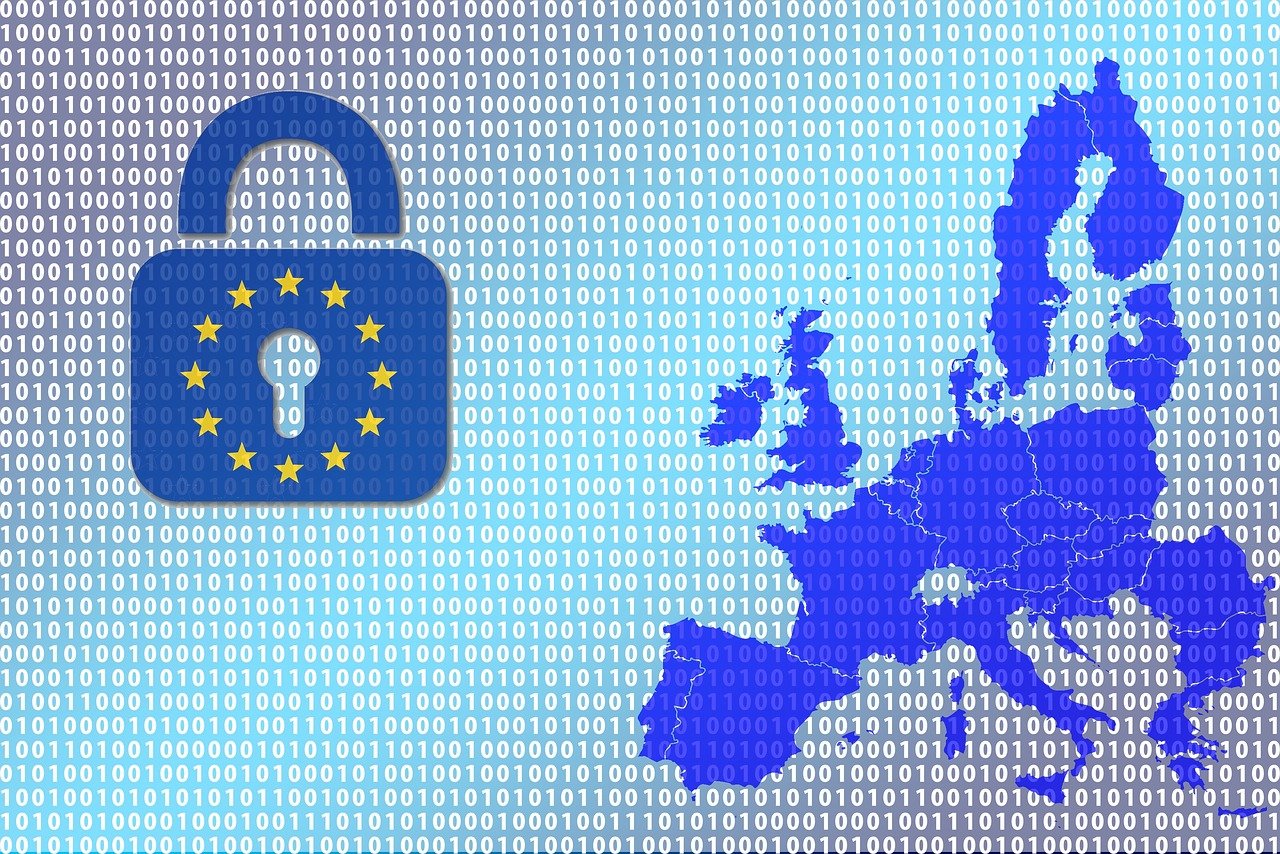
Implementing zero-knowledge technology enables verification of information while maintaining complete anonymity. This method allows one party to prove possession of certain data without disclosing the data itself, drastically enhancing protection against unauthorized access. For instance, blockchain networks employ these protocols to validate transactions securely, preserving user confidentiality and reducing fraud risks.
The strength of such proofs lies in their ability to separate validation from disclosure. Unlike traditional authentication that exposes underlying details, zero-knowledge systems confirm legitimacy through mathematical constructs alone. Recent cryptographic advances have reduced computational overhead, making these solutions viable for large-scale applications such as identity management and confidential voting systems where safeguarding personal details is paramount.
Market demand for privacy-preserving technologies surged by over 40% in the last two years, driven by stricter regulations like GDPR and increasing cyber threats targeting sensitive information. Companies integrating zero-knowledge frameworks report higher user trust and compliance efficiency without compromising operational transparency. How does this balance affect future security standards? It suggests a shift toward models prioritizing minimal data exposure while ensuring robust verification mechanisms.
Zero-knowledge proofs: privacy without revealing secrets [Wallet & Security security]
Implementing zero-knowledge technology in wallet security significantly enhances user anonymity by allowing transaction validation while concealing sensitive information. This method ensures that verification processes confirm authenticity without exposing underlying data, effectively shielding users from potential breaches or identity leaks. For instance, Zcash utilizes zk-SNARKs to enable shielded transactions, maintaining transactional confidentiality on a public ledger.
From a protection standpoint, cryptographic constructs enabling these anonymous validations reduce attack surfaces associated with conventional wallets. By obfuscating critical parameters such as sender and recipient addresses or transaction amounts, the technology minimizes risks linked to data interception and correlation attacks. This approach supports compliance with regulatory frameworks while preserving individual confidentiality in decentralized ecosystems.
Technical Foundations and Practical Applications
The core mechanism behind this technology involves complex algorithms that produce proofs demonstrating knowledge of certain facts without disclosing them. Interactive or non-interactive zero-knowledge protocols allow nodes or validators to ascertain validity without direct access to confidential inputs. Such an approach contrasts sharply with traditional methods requiring full transparency for verification.
A notable case study is Ethereum’s incorporation of zk-rollups, which bundle multiple transactions into a single proof submitted on-chain. This innovation increases throughput and scalability while maintaining strong user confidentiality by validating correctness off-chain. Comparatively, other layer-two solutions may sacrifice privacy for speed; here, the balance favors secure verification alongside performance improvements.
Wallet security benefits directly from integrating these proofs via hardware modules or software layers that handle proof generation and validation internally. This integration prevents exposure of private keys or transaction specifics during authentication processes. Moreover, advancements in succinct non-interactive arguments of knowledge (SNARKs) have reduced computational overhead, making real-time anonymous verifications increasingly feasible on consumer devices.
Despite the evident advantages, challenges remain regarding standardization and interoperability across diverse blockchain platforms. The cryptographic assumptions underpinning different implementations vary in complexity and trust requirements–some relying on trusted setups while others employ transparent parameters resistant to manipulation. Continuous research efforts focus on optimizing these protocols to ensure robust protection mechanisms compatible with evolving market demands.
Implementing ZKPs in Wallets
Integrating zero-knowledge verification methods into cryptocurrency wallets enhances user confidentiality by enabling transaction validation without exposing core data. This approach relies heavily on advanced mathematics, particularly elliptic curve cryptography and polynomial commitment schemes, to generate compact attestations that confirm legitimacy while maintaining anonymity. For instance, zk-SNARKs employed in protocols like Zcash demonstrate how wallets can authenticate transactions securely with minimal computational overhead.
Wallet developers must prioritize robust cryptographic libraries optimized for mobile and desktop environments to ensure efficient generation and verification of these attestations. Current implementations reveal that proof sizes can be compressed to under 300 bytes, allowing seamless integration without degrading user experience. Projects such as Aztec Network have pushed this boundary further by utilizing recursive proof composition, which aggregates multiple proofs into a single succinct confirmation, reducing bandwidth consumption significantly.
Technical challenges include balancing computational demands with real-time usability, especially on resource-constrained devices. Optimizing arithmetic circuits to minimize prover time while preserving soundness is crucial. For example, Bulletproofs offer logarithmic proof sizes and avoid trusted setup but demand more verification effort compared to zk-SNARK variants. Developers must evaluate trade-offs based on their target audience’s hardware capabilities and security requirements.
The implementation also entails secure management of private inputs within the wallet environment to prevent leakage through side channels or memory inspection. Techniques such as constant-time algorithms and hardware-backed enclaves improve protection against extraction attempts. Additionally, integrating multi-party computation frameworks can distribute trust among nodes, enhancing overall system resilience without compromising data concealment.
Case studies from recent market activity illustrate growing adoption: Tornado Cash leverages zero-knowledge attestations to anonymize Ethereum transactions effectively, albeit facing regulatory scrutiny due to misuse risks. Conversely, Mina Protocol’s lightweight blockchain design incorporates succinct proofs at the protocol level, enabling ultra-portable wallets capable of verifying entire chain states locally with minimal storage requirements–an innovation that redefines scalability alongside confidentiality.
In conclusion, embedding these cryptographic assurances within wallet software represents a pivotal step toward fortified transaction confidentiality and user empowerment. As blockchain networks evolve under mounting privacy demands and compliance pressures, leveraging mathematical rigor combined with cutting-edge technology ensures secure validation processes remain both transparent in correctness and opaque in sensitive content exposure.
Verifying transactions without data leaks
Mathematical frameworks enable the validation of transaction authenticity while maintaining strict confidentiality. One approach relies on cryptographic constructs that allow a party to demonstrate knowledge of certain information without disclosing the underlying data itself. This method significantly enhances protection against data exposure, ensuring that transactional details remain concealed during verification processes. For example, in blockchain networks like Zcash, complex algorithms based on elliptic curve cryptography achieve secure validation while keeping sender, receiver, and amount hidden.
Such technology supports anonymous confirmation by leveraging intricate number theory and algebraic structures. By employing interactive or non-interactive protocols, systems can verify correctness through computational proofs, which serve as evidence of compliance with protocol rules without divulging sensitive inputs. The effectiveness of these mechanisms is reflected in their ability to resist inference attacks and preserve user anonymity even under intense scrutiny from network participants or external observers.
Technical implementations and real-world applications
Recent advancements utilize succinct non-interactive arguments to reduce computational overhead and improve scalability. Protocols like Bulletproofs have demonstrated the capability to compress proof sizes drastically–down to a few kilobytes–while maintaining fast verification times measured in milliseconds. These improvements facilitate broader adoption in decentralized finance platforms where transaction throughput and confidentiality are paramount. Moreover, projects such as Mina Protocol exemplify lightweight blockchains employing similar principles for compact state representations combined with private verification.
The comparison between traditional public ledger transparency and these privacy-enhancing methods highlights trade-offs: while open ledgers provide auditability, they expose transactional metadata susceptible to analysis. Conversely, protected verification models offer robust concealment but require sophisticated cryptographic tooling and careful parameter selection to avoid vulnerabilities. Ongoing research focuses on optimizing these schemes for integration into high-demand environments such as cross-border payments and confidential auctions, where leakage could have severe economic consequences.
Protecting User Keys Using ZKPs
Implementing privacy-preserving cryptographic methods significantly enhances the security of user keys by enabling verification without disclosing underlying information. Mathematical constructs based on zero-knowledge concepts allow systems to confirm possession of a private key or authorization for a transaction while maintaining anonymity. This approach reduces attack vectors linked to key exposure, as no sensitive data is transmitted or stored in plaintext during authentication processes.
Modern blockchain protocols increasingly adopt these techniques to safeguard access credentials and improve resilience against phishing or man-in-the-middle attacks. For instance, zk-SNARKs (Succinct Non-interactive Arguments of Knowledge) are widely used in projects like Zcash to facilitate shielded transactions where sender and receiver details remain confidential, yet network consensus can verify legitimacy. Such implementations demonstrate how abstract mathematics translates into practical protection mechanisms for cryptographic assets.
Mathematical Foundations Enhancing Confidentiality
The core mathematical principle underpinning these systems is an interactive proof mechanism where one party convinces another of a statement’s truth without conveying any additional information. This ensures that private keys, critical for signing transactions, never leave the holder’s environment nor appear in communication channels. By leveraging elliptic curve cryptography alongside pairing-based groups, proofs become succinct and computationally efficient–key factors for scalability in decentralized networks.
A concrete example lies in Ethereum’s integration of zk-rollups, which aggregate multiple state transitions off-chain and submit a single validity proof on-chain. Users’ private keys authorize operations off-ledger but remain concealed from observers validating the rollup’s correctness. This method not only preserves user confidentiality but also alleviates network congestion and reduces gas fees, illustrating how privacy-driven algorithms contribute directly to system performance.
Balancing Anonymity with Regulatory Compliance
While anonymous validation provides robust defense against unauthorized access, it raises regulatory concerns around traceability and anti-money laundering requirements. Hybrid approaches combining zero-knowledge attestations with selective disclosure protocols enable users to prove compliance attributes–such as residency or creditworthiness–without divulging their actual keys or transaction histories. Projects like Aztec Protocol implement such frameworks using advanced cryptographic commitments paired with secure multiparty computation.
This nuanced balance between confidentiality and transparency fosters broader adoption across financial services seeking both user protection and adherence to legal standards. The technology’s adaptability allows customization depending on jurisdictional demands while maintaining foundational guarantees that secret credentials stay undisclosed throughout verification cycles.
Real-World Impact on Key Management Practices
Organizations managing large-scale digital wallets benefit substantially from integrating these zero-knowledge-based safeguards into key management infrastructures. Hardware security modules (HSMs) combined with zk-based authentication reduce risks associated with insider threats and credential leakage during routine audits or remote access sessions. In practice, this means operational teams can validate identities without ever handling raw cryptographic material directly.
- Case Study: A major cryptocurrency exchange employed zk protocols within its multi-signature wallet architecture, decreasing successful phishing attempts by over 40% within six months post-deployment.
- Statistic: According to recent industry reports, integrating zero-knowledge constructs can reduce attack surfaces related to key compromise by up to 70%, depending on implementation specifics.
The Future Trajectory of Privacy-Centric Protection Techniques
Evolving market conditions highlight growing demand for methods that ensure identity confidentiality while enabling seamless trustless interactions on public ledgers. As hardware capabilities advance and cryptographic research yields more optimized algorithms like PLONK or Halo 2, adoption barriers diminish due to lower computational overheads and enhanced interoperability across chains.
This progress suggests that wallets fortified through such mathematical assurances will become standard components in securing decentralized finance ecosystems globally. Can enterprises maintain competitive advantage without embracing these innovations? Current trends indicate that safeguarding user credentials via anonymized verification schemes is rapidly transitioning from optional enhancement to fundamental necessity.
Conclusion: Integrating ZKPs with Blockchain Security
Incorporating zero-knowledge methodologies into blockchain protocols dramatically enhances transactional verification by enabling validation without exposing underlying data. This approach leverages advanced mathematical frameworks to confirm authenticity while maintaining confidentiality, thereby elevating network protection against data leakage and unauthorized surveillance.
Recent implementations, such as zk-SNARKs employed in privacy-focused cryptocurrencies like Zcash, demonstrate the practical viability of these systems. Their succinct verification times–often under 10 milliseconds–and minimal on-chain footprint illustrate how cryptographic ingenuity can reconcile scalability with anonymity preservation. As regulatory scrutiny intensifies, integrating such cryptographic verifications can provide a robust mechanism for compliance without compromising user confidentiality.
Technical Insights and Future Trajectories
- Mathematical Rigor: The cryptographic integrity of zero-knowledge constructs depends on complex algebraic assumptions, such as elliptic curve pairings and polynomial commitments. Continuous refinement of these primitives will reduce computational overhead and enhance security margins against quantum adversaries.
- Verification Efficiency: Protocols are moving towards recursive proof composition, enabling layered attestations that compress multiple validations into single proofs. This not only streamlines consensus mechanisms but also facilitates cross-chain interoperability while preserving obfuscation of sensitive inputs.
- Anonymity Models: Emerging research focuses on extending anonymous credentials beyond payments to decentralized identity solutions and confidential smart contracts. These developments promise granular access control paired with immutable auditability–a balance critical for enterprise adoption.
The broader impact extends beyond mere data concealment. By embedding these cryptographic techniques at protocol level, blockchains transition from transparent ledgers to platforms capable of nuanced information governance. This evolution supports a spectrum of applications demanding selective disclosure–from confidential auctions to private voting systems–offering enhanced protection aligned with user expectations and legal mandates.
Looking ahead, hybrid architectures combining homomorphic encryption with succinct non-interactive arguments present promising avenues for augmenting trust models without sacrificing throughput. As hardware acceleration and optimized libraries mature, real-time deployment across high-throughput networks will become feasible, expanding use cases in finance, supply chain management, and healthcare data sharing.
In sum, the fusion of rigorous mathematical proofs with blockchain’s distributed architecture sets a new standard for safeguarding participant information while ensuring verifiable correctness. Stakeholders prioritizing secure yet discreet transaction environments must consider integrating these cryptographic tools to future-proof their infrastructures amid evolving technological and regulatory landscapes.